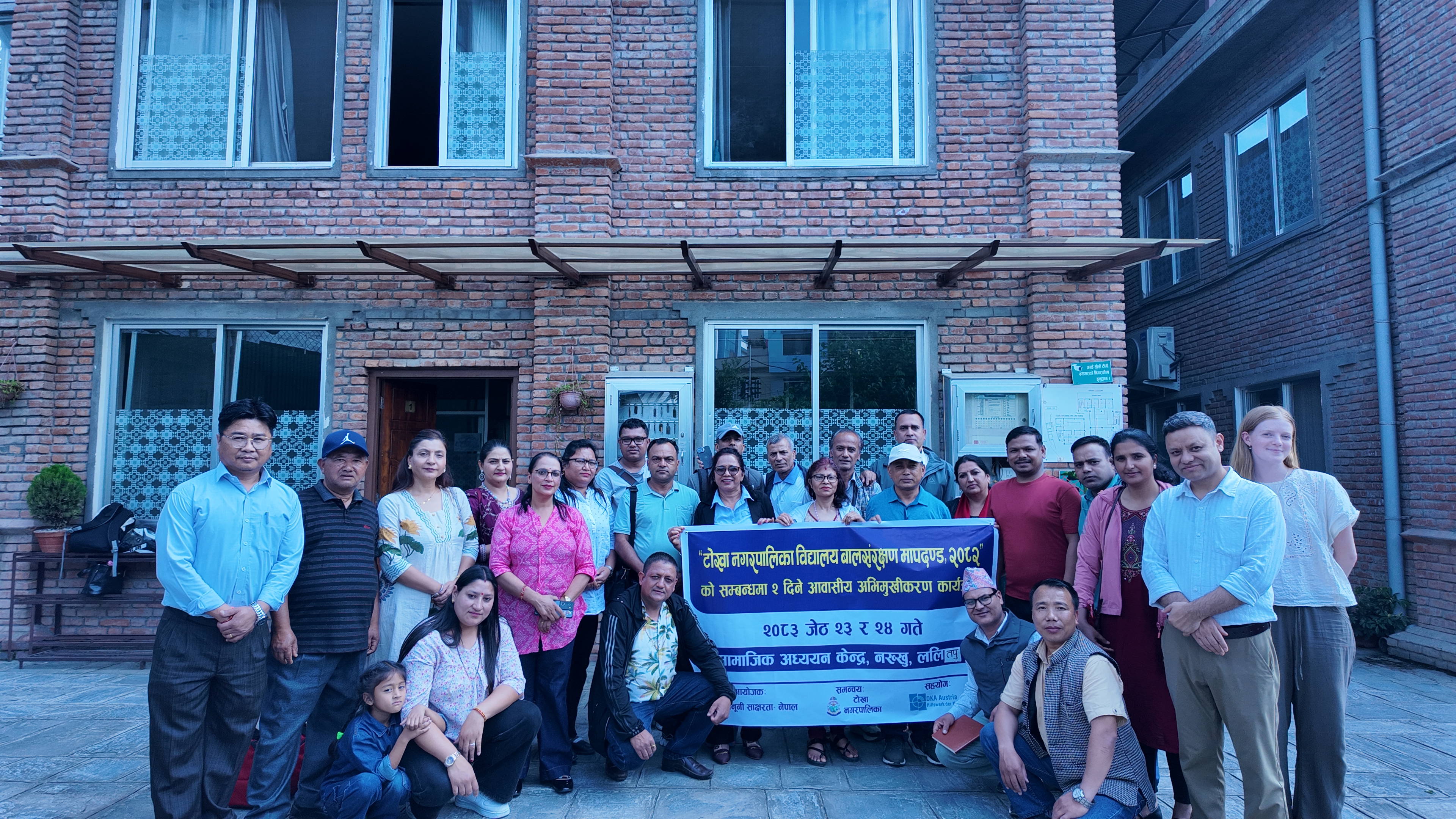
LLN Organizes Two-Day Residential Interaction Program on School Children Safeguarding Policy
Legal Literacy Nepal (LLN) organized a two-day residential interaction program on the “School Children Safeguarding Policy” on 6–7 June 2026 at the Social Work Institute, Nakhu, Lalitpur. The program brought together 23 participants, including head teachers, teachers, and School Management Committee (SMC) members from eight community schools in Tokha Municipality.
The program aimed to strengthen participants’ understanding of child safeguarding and support the effective implementation of the School Children Safeguarding Policy and Standards in schools. It also provided a platform for school stakeholders to share experiences, identify challenges, and explore practical measures to create safer and more protective learning environments for children.
On the first day, discussions focused on the key provisions, objectives, and implementation mechanisms of the School Children Safeguarding Policy. Participants explored the importance of safeguarding measures in preventing violence, abuse, neglect, bullying, discrimination, and other risks that may affect children within school settings. To encourage active participation, attendees were divided into four groups and engaged in discussions on the various risks and protection concerns faced by children in schools. The groups identified issues such as peer violence, corporal punishment, unsafe reporting mechanisms, discrimination, and inadequate awareness of child protection measures. They also proposed practical solutions, including strengthening reporting and referral systems, increasing awareness among students and parents, enhancing teacher capacity, and promoting child-friendly school practices. Following the group discussions, each group presented its findings and recommendations, which were further discussed during a plenary feedback session.
The second day focused on the roles and responsibilities of teachers and School Management Committees in ensuring child protection and safeguarding within schools. Participants examined how school authorities can foster a culture of safety, respect, and accountability by adopting preventive measures and responding effectively to child protection concerns. Through group work, participants discussed the development and enforcement of codes of conduct for teachers and students, emphasizing professional behavior, positive discipline, non-discrimination, respectful communication, and appropriate relationships within the school environment.
The discussions also explored practical strategies for the effective implementation of the School Children Safeguarding Standards in schools. Participants highlighted the need to establish child-friendly reporting and complaint mechanisms, designate safeguarding focal persons, integrate safeguarding measures into school policies and annual plans, conduct regular awareness and orientation programs, strengthen coordination with local government authorities, and regularly monitor compliance with safeguarding standards. The importance of creating a school culture where children feel safe, heard, respected, and protected was strongly emphasized throughout the discussions.
The program concluded with participants expressing their commitment to strengthening child safeguarding measures in their respective schools and working collaboratively to ensure that all children can learn in safe, inclusive, and supportive educational environments. The programme was supported by DKA Austria.